
Thinsulate™ 3M
Thinsulate™ is an insulating material developed by 3M to provide thermal and acoustic comfort inside vehicles, without adding weight or bulk.
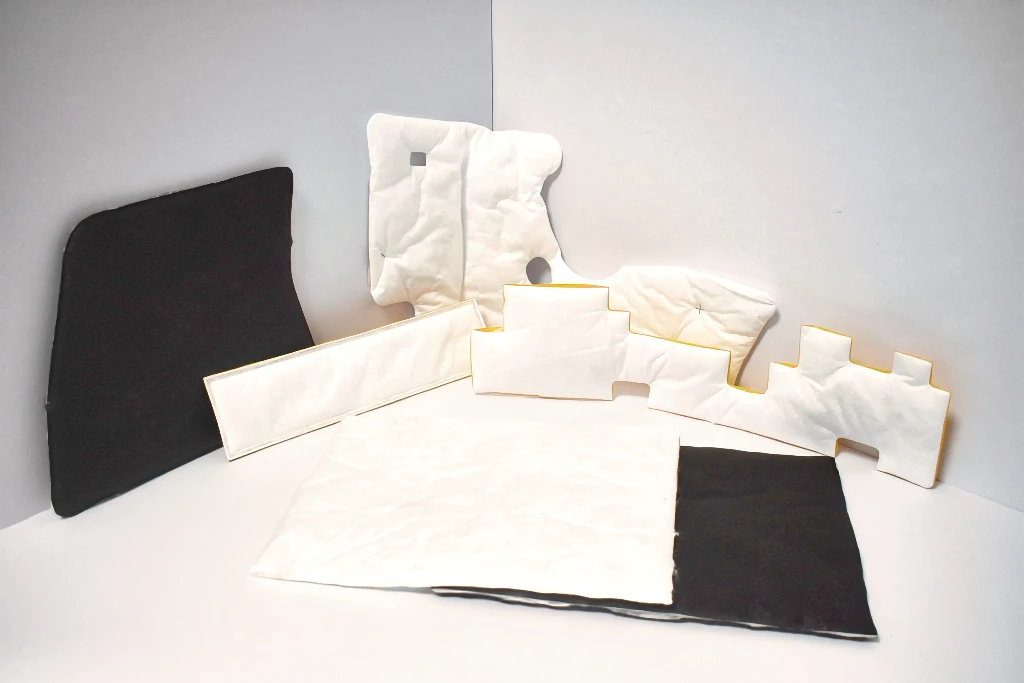
It is used in door panels, dashboards, headliners, hoods, and bulkheads to improve noise insulation and cabin thermal regulation.
Thinsulate™ is composed of polypropylene (PP, ~65%) and polyester (PE, ~35%) microfibers, with an open-cell structure that provides excellent sound absorption across a wide frequency spectrum and stable thermal insulation even under humid conditions.
It is hydrophobic, lightweight, non-woven, and compliant with FMVSS 302 safety standards (flammability, self-extinguishing).
Available in different densities and thicknesses, it maintains its performance even after compression, bending, or aging.
It does not fray, is easy to cut, and can be laminated or coupled with technical materials. Ideal for passenger, commercial, and industrial vehicles.
Processing
We process the entire Thinsulate™ 3M range using standard techniques such as die-cutting or punching, according to customer specifications.
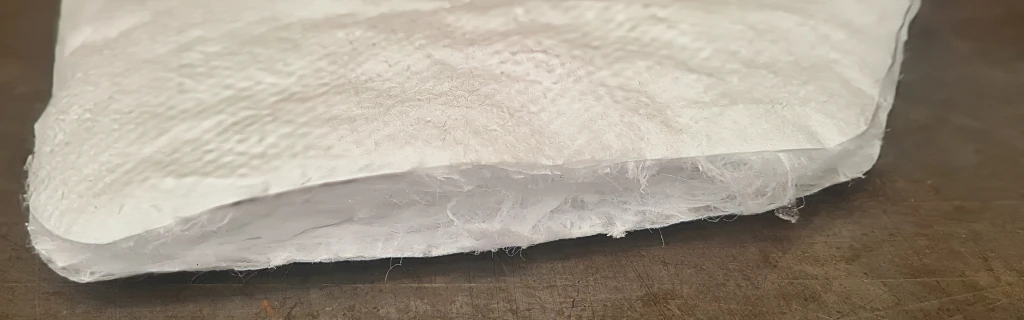
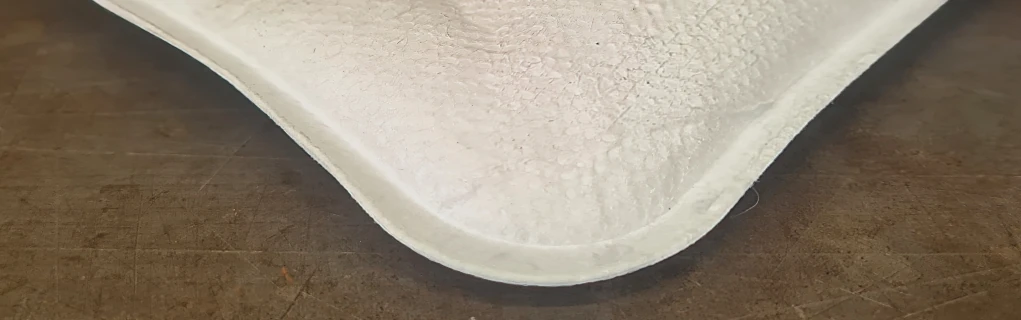
Processing may involve simple cutting to the required size and shape (plain cut), or the edges may be “sealed” using hot trim or edge seal technology.
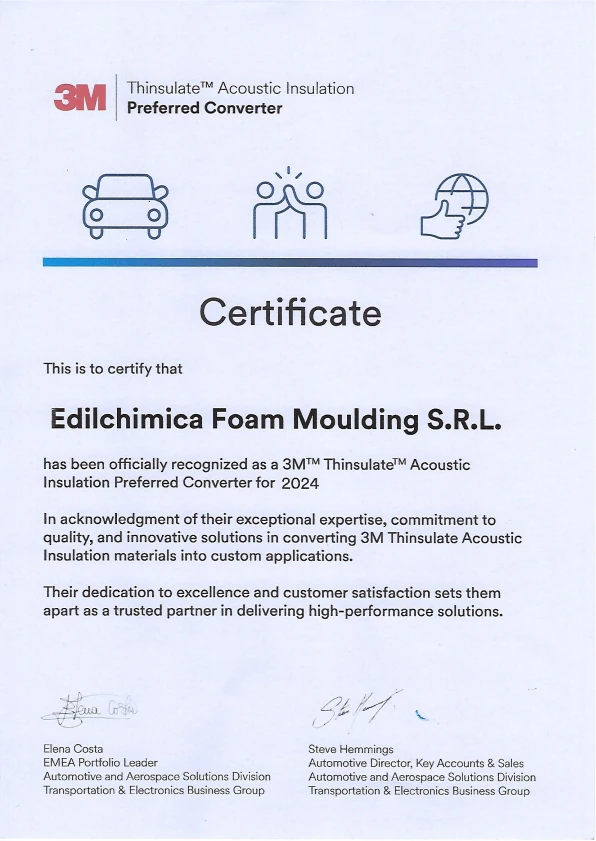
Starting from 2023/2024, EDILCHIMICA FOAM MOULDING has become a reference point for the conversion of Thinsulate™ 3M products in Italy and Europe, being able to offer materials and cutting types with standards identical to those of 3M.
Plain Cut
Hot Trim
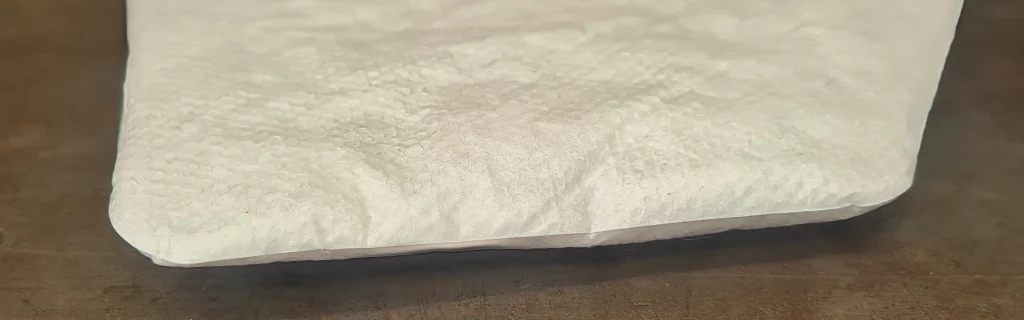
Edge Seal
Polypropylene properties
- Thermal shrinkage: when exposed to temperatures above 100°C, fibers tend to shrink, changing their original length.
- Acid resistance: stable with both weak and strong acids.
- Alkali resistance: stable with both weak and strong alkalis.
- Solvent resistance: although resistant to common solvents, polypropylene dissolves in the presence of chlorinated solvents at high temperature.
- Heat effect: plasticizes at 140°C.
- Melting point: between 170°C and 175°C.
- Moisture regain: very low, equal to 0.05%.
- Sunlight resistance: loses strength.
- Resistance to microorganisms, mold, and insects: not attacked by them.
- Flame behavior: burns slowly, melting.
- Abrasion resistance: very high.